
LIGNACITE LTD
NORFOLK HOUSE
HIGH STREET
BRANDON
SUFFOLK IP27 0AX
Tel: 01842 810678
Fax: brandonsales@lignacite.co.uk



Suppliers of: Concrete Blocks Masonry Blocks Dense Concrete Blocks lightweight blocks building Blocks Concrete Blocks Concrete Soffit Blocks concrete
Lignacite are a leading manufacturer of concrete and masonry products and have one of the most efficient and modern manufacturing sites in the U.K.
Sustainable and Environmentally Sensitive Manufacturing
Lignacite sets the standards for sustainable and environmentally sensitive manufacturing. Our curing chambers re-use heat given off by the exothermic reaction between cement and water and when additional heat is needed, gas emissions are pumped back into the chambers, where blocks absorb CO2.
All water used at Brandon comes from a on site borehole, and is recycled at up to 5000 gallons / hour. Sand and aggregate quarried on land adjacent to the plant saves around 36,000 lorry journeys over the period of extraction. The land is then restored on an annual basis for wildlife conservation.
Main Product Ranges:
Lignacite ECO Range Concrete Blocks
Lignacite ECO concrete blocks are available with either 50% or 70% recycled content. They have been designed to reduce the embodied carbon impact of construction while meeting evolving planning regulations.
Each block is backed by an independently verified Environmental Product Declaration (EPD), providing transparent and reliable environmental performance data to support sustainability goals. In addition, we offer delivery using HVO (hydrogenated vegetable oil) fuelled vehicles, reducing the carbon embodiment for delivery by at least 90% compared to diesel.
Standar Range Concrete Blocks
All our products are Kitemarked as conforming to BS EN 771-3 Aggregate Concrete Masonry Units. They comply with category 1 Masonry Units and are manufactured under a quality assurance scheme assessed and certified to BS EN 9001:2000 by the British Standards Institute.
Lignacite GP Medium DenseBlock
- Lignacite General Purpose (GP) blocks are medium density and suitable for a wide range of applications above and below ground. They are robust and durable and have a textured face, which provides an excellent surface for mortars, renders and plasters.
- Manufactured to BS EN 771-3, Ligancite GP blocks contain a proportion of recycled materials, and their sustainability performance has been verified through an Environmental Performance Declaration (EPD).
Lignacite Standard Block range (Medium Dense)
- Lignacite concrete blocks are fine textured and available with a paint grade or fair face finish. Manufactured to BS EN 771-3, Lignacite blocks are robust and durable with a technical performance that makes them well-suited to most applications. The blocks’ unique mix design (consisting of cement, fine aggregates and recycled graded-wood particles) accounts for their outstanding technical performance.
- The 140mm width version (known as Lignacite SP) has a specially formulated mix that optimises the block density to produce a solid block with a unit weight of less than 20kg. There is a slight colour difference between Lignacite SP and 100mm Lignacite blocks.
Lignalite 190mm Lightweight Blocks
- Lignalite blocks provide combine ease of handling with thermal efficiency and are available in standard and paint finish grades.
- Available in a 190mm block thickness, when compared to more slender walls, Lignalite blocks can be used to create greater spanning walls saving on vertical or horizontal supports.
- Manufactured to BS EN 771- 3, Lignalite blocks are tough, durable and suitable for all types of buildings.
Fibo 850 Ultra Lightweight Blocks
- Fibo 850 ultra lightweight concrete blocks are available in 100mm and 140mm thicknesses. They are suitable for general-purpose walling applications and provide a strong background for applying plasters, renders and fixings. Fibo 850 blocks are easy to handle and provide great thermal efficiency values.
- Manufactured to BS EN 771-3, they consist of expanded clay aggregates and a mixture of other naturally occurring raw materials and cement. The clay aggregate is produced from carefully selected clays, which are bloated through heat expansion to create a low density, porous aggregate with numerous cavities. This makes Fibo 850 incredibly light and thermally efficient.
Lignacrete Block range (Dense)
- Lignacrete dense concrete blocks are robust and durable with a technical performance that will fulfil most applications. They are manufactured to BS EN 771-3 and are available in standard and paint grade (close textured for direct painting). High strength blocks up to 30N/mm² are available for demanding, loadbearing designs.
- Generally, blocks have a face size of 440mm x 215mm. However, Lignacrete 140mm Midi blocks have a face size of 290mm x 215mm and have been developed for easier handling while retaining the performance of conventional-size solid blocks.
Coursing Blocks
- Achieve uniform performance throughout a wall with Coursing Blocks. With a face size of 440mm x 65mm, you can remove the need for on-site cutting, which reduces waste and improves productivity.
Further technical information is available to download from the BPi download Library or directly from the manufacturer’s own website.
Lignacite achieves PAS 2080 certification for carbon management
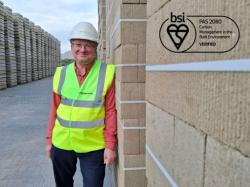 Lignacite has become one of the first concrete block manufacturers to achieve PAS 2080:2023 certification as a construction material supplier. This achievement recognises our commitment to managing and reducing carbon emissions across the business.
Awarded in September 2026, the certification covers our manufacturing sites in Suffolk and Essex. It provides independent assurance of our approach to carbon management, giving architects, specifiers and contractors greater confidence in our environmental credentials.
What is PAS 2080?
PAS 2080:2023 is a voluntary specification for carbon management in buildings and infrastructure. It sets out a framework for measuring, managing and reducing whole-life carbon emissions throughout a building’s lifecycle.
Developers, designers, contractors and material suppliers can all apply for certification, which demonstrates that their business has established processes for managing carbon emissions, setting reduction targets and monitoring its progress. Importantly, it also requires an ongoing commitment to minimising carbon emissions, rather than simply meeting requirements during the assessment period.
Building on previous activity
For Lignacite, achieving certification was a natural progression of our environmental work. Our SHEQ Manager, Marvyn Candler, estimates that we were already meeting around 70-80% of the standard’s criteria when we started to pursue certification.
“For several years, we’ve been strengthening our carbon management processes and improving the transparency of our emissions reporting,” he explains. “We’ve also invested in practical measures to reduce our environmental impact. This includes switching to hydrotreated vegetable oil (HVO) as an alternative to conventional diesel, along with harnessing solar energy at our Brandon factory.”
Product innovation has been another priority. In May 2025, we launched the Lignacite ECO Range, featuring blocks with 50-70% recycled content and independently verified Environmental Product Declarations (EPDs). We're continuing to develop the range, with an upgraded ECO block due to launch in November 2026. To be among the first to hear about the new product, visit our dedicated ECO Range website and sign up for updates.
These initiatives, together with our established carbon monitoring and reporting processes, meant much of the groundwork for certification was already in place.
Following an independent gap analysis in January, a Stage 1 audit in April and a Stage 2 audit in September, we successfully completed the certification process in September 2026. In fact, we progressed through both the stage 1 and stage 2 audits no non-conformities raised at all, which the auditor commented was rare.
An aerial view of our Brandon manufacturing plant, as we strengthen our approach to carbon management with PAS 2080.
Giving customers confidence
For architects, specifiers and contractors, PAS 2080 certification offers additional reassurance that our environmental commitments are supported by independently assessed processes and robust evidence. It complements our existing EPDs, which provide verified environmental impact data for individual block ranges.
As Marvyn explains: “We don’t just say our blocks are low carbon. We’ve got the evidence to prove it. Our carbon management processes are independently scrutinised, and that helps reinforce trust with our customers.”
By sharing reliable environmental data, we can help construction partners make informed material choices and identify opportunities to reduce carbon emissions across their projects.
Dedicated to ongoing improvement
Achieving PAS 2080 certification is an important milestone, but it’s also an ongoing process. Under the three-year certification cycle, we will undergo annual audits to demonstrate how we’re continuing to manage and reduce carbon emissions. The auditors will also assess evidence of new projects and initiatives undertaken since the last assessment.
This focus on continuous improvement is already shaping our plans. We’re working to upgrade the existing solar panels at Brandon, while plans for a new solar installation are progressing at Nazeing. We’re also investigating ways to reduce our reliance on virgin aggregates and conventional cement. This includes exploring the use of ground granulated blast-furnace slag (GGBS), an alternative cementitious material that could help lower the embodied carbon of our blocks.
For Marvyn, who has been instrumental in driving our carbon management initiatives and achieving certification, the motivation is about more than meeting industry standards.
“This isn’t our planet. We borrow it from the children of the future,” he says. “What we do today can make a difference tomorrow.”
It’s a principle that will continue to guide our approach as we work to reduce our carbon footprint and help our customers create a greener built environment. Visit our Sustainability page to discover how we’re minimising our impact and helping build a more sustainable future for the UK construction industry.
What is Part Z and how does it relate to sustainability in construction?
 When it comes to reducing carbon emissions in construction, there’s been plenty of focus on making buildings more energy-efficient when in use. But what about the emissions associated with the materials used to build them?
That’s where Part Z comes in. This proposed amendment to the Building Regulations aims to address embodied carbon by introducing mandatory carbon assessments and limits on emissions associated with construction.
Although Part Z is yet to be mandated, the proposal could have significant implications for the construction industry. In this article, we explore what Part Z involves, its relationship with sustainability and how developers and contractors can prepare.
What is Part Z?
Part Z is a proposed amendment to Building Regulations in England. First developed in 2021 by a group of independent experts, including architects, researchers, engineers and environmental specialists, it aims to regulate embodied carbon emissions within the built environment.
It seeks to introduce mandatory whole life carbon assessments for building projects and impose limits on upfront embodied carbon emissions, from raw material extraction through to construction and installation. The longer-term objective is to extend these limits across the building lifecycle. It also seeks to discourage excessive or wasteful use of construction materials.
The principle of regulating embodied carbon has attracted statements of support from more than 200 organisations across the construction industry, including housing developers, architects, contractors and industry bodies such as RIBA and the Institution of Structural Engineers.
Why was Part Z proposed?
The authors of the proposal identified a gap in current legislation. While operational carbon emissions (from buildings in use) are regulated, embodied carbon emissions aren’t subject to similar national requirements. That’s despite an estimated one in 10 tonnes of the UK’s total greenhouse gas emissions coming from embodied carbon associated with the production and use of construction materials.
According to the UK Green Building Council (UKGBC), the built environment could be responsible for around 1.7 billion tonnes of greenhouse gas emissions between 2024 and 2050. However, less than one-tenth of these projected emissions are addressed by existing regulations and the Future Homes and Buildings Standards.
Although the construction industry has introduced voluntary initiatives to reduce embodied carbon, progress has been limited. In addition, the lack of national regulations has resulted in local authorities and businesses developing their own requirements, resulting in inconsistencies.
The issue is becoming increasingly important as buildings become more energy-efficient, operational carbon emissions fall and the UK heads towards its Net Zero deadline in 2050. As a result, embodied carbon makes up a growing proportion of a building’s total lifecycle emissions.
By making the measurement and reporting of whole-life carbon emissions mandatory, and introducing limits on upfront carbon emissions, Part Z aims to address this regulatory gap and encourage reductions in carbon emissions throughout a building’s lifecycle.
What are the key points of the Part Z building regulations?
There are two main elements to the proposed Part Z regulations:
Part Z1: This would make whole-life carbon assessments a standard part of the building design process. Project teams would be required to measure and report emissions throughout a building’s lifecycle.
Part Z2: This aims to ensure that reasonable provision is made to minimise carbon emissions associated with building work. The upfront embodied carbon (modules A1-A5) of the overall building and its individual elements should not exceed reasonable standards of intensity in accordance with Section 3 of Part Z.
Mandatory reporting would first cover major building projects of more than 1,000m² or more than 10 dwellings. These thresholds are provisional and are subject to change if Part Z is adopted.
If Part Z becomes law, developers would initially be required to measure and report carbon emissions, with mandatory limits introduced at a later stage. This would allow time to gather data and set realistic targets.
These limits would initially focus on upfront embodied carbon emissions (stages A1–A5), covering the supply chain, from raw material extraction and manufacturing to transportation and installation on-site. The longer-term ambition is to extend the limits across a building's whole lifecycle.
Because Part Z would sit within the Building Regulations, compliance would be checked by Building Control Officers. The proposal suggests that assessments would be carried out before construction, using estimated material quantities and carbon data. This would be followed by a final assessment based on the materials actually used.
Environmental Product Declarations (EPDs) would support this process by providing verified product data. This information, alongside final material quantities, would help Building Control Officers assess whether projects meet the proposed carbon limits.
How does Part Z relate to sustainability in construction?
Part Z relates to sustainability in that it aims to reduce the carbon footprint of future building projects. Given that the construction industry and its associated processes contribute significantly to the UK’s carbon emissions, Part Z could play an important role in reducing these figures.
It would encourage architects, developers and contractors to consider embodied carbon throughout design and construction processes. This might involve designing buildings that use less building materials or choosing low carbon products. In addition, there might be greater reuse of existing materials and the incorporation of more recycled content in support of the circular economy. More attention may also be given to the carbon emissions related to transporting materials to site and installing them.
These changes would help the construction industry reduce its reliance on virgin materials, minimise waste and lower the embodied carbon of new buildings.
In turn, this would support the UK’s target of reaching net zero by 2050. With operational emissions expected to fall as buildings become more energy-efficient, reducing embodied carbon will be increasingly important to achieving this ambition.
Is Part Z law yet? Why hasn’t it been implemented?
Part Z hasn’t been mandated yet. It remains an industry-led proposal, although it was discussed in the House of Commons on 13 July 2026.
During the debate, the government acknowledged the importance of reducing embodied carbon and recognised Part Z as one possible approach. However, concerns were raised about the potential impact on construction project costs, building safety and housing delivery, especially for small developers.
The debate also highlighted the need for reliable carbon data, consistent assessment methods and the means to implement them. It confirmed that further research is underway but did not commit to introducing Part Z or provide a timeline.
However, this doesn’t mean that Part Z can be ignored. Similar requirements are already in place in some areas. For instance, The London Plan states that whole-life carbon assessments are mandatory for developments that are referable to the Mayor of London. These must be submitted as part of the planning process, with further assessments after construction.
Elsewhere, the EU is introducing mandatory lifecycle carbon reporting for new buildings over 1,000m² from 2028, extending to all new buildings in 2030.
Part Z would therefore introduce national requirements for practices that are already being adopted across parts of the construction industry. While its future remains uncertain, developers and contractors are increasingly being asked to measure and reduce embodied carbon emissions.
How does Part Z differ from Part L and the Future Homes and Buildings Standards?
They are all related but cover different aspects of building projects. Part Z proposes to regulate embodied carbon emissions, including those associated with the production, transportation and installation of construction materials.
Part L of the Building Regulations, on the other hand, focuses on energy efficiency and associated carbon emissions when a building is in use. The Future Homes and Buildings Standards update Part L and other requirements to improve the energy efficiency and reduce the operational carbon emissions of new buildings.
As such, Part Z would complement these regulations, addressing embodied carbon alongside operational emissions to help reduce a building’s overall carbon footprint and its impact on the environment.
How developers and contractors can prepare for Part Z now
One of the biggest steps teams can take is to start assessing embodied carbon in their projects today, establishing processes for collecting and recording carbon data. The Royal Institution of Chartered Surveyors (RICS) Whole Life Carbon Assessment methodology is a great place to start.
Even if materials haven’t been specified at the planning stage, high-level carbon assessments can be completed using estimated quantities and generic carbon data.
If products have been specified, their Environmental Product Declarations (EPDs) should be reviewed. These documents provide independently verified information about a product’s environmental impact, including its embodied carbon. This data can help teams to start comparing suitable products and identifying low carbon alternatives for current and future projects.
Find out more in our introduction to Environmental Product Declarations.
How is Lignacite supporting lower-carbon construction?
At Lignacite, we’re committed to achieving net zero by 2030 and supporting sustainable construction. As part of this, we’ve been working on ways to reduce the embodied carbon of our products for several years.
For example, the Lignacite ECO Range was launched in 2025 and contains between 50% and 70% recycled content. It also has up to 70% lower embodied carbon than equivalent standard Lignacite blocks. These savings cover lifecycle stages A1–A4, based on HVO-fuelled deliveries within 50 miles of our Nazeing site.
We provide independently verified Environmental Product Declarations (EPDs) for our blocks, too. This gives architects, developers and contractors reliable carbon data to support whole-life carbon assessments and more informed specification decisions.
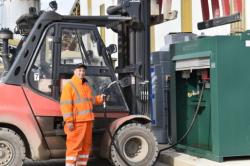
Hydrotreated Vegetable Oil (HVO) is used to fuel our on-site vehicles and site deliveries from our Nazeing site. HVO can reduce lifecycle greenhouse gas emissions from fuel use by up to 90% compared with conventional diesel. You can find out more in our guide to HVO in sustainable construction logistics.
Although Part Z isn’t law in the United Kingdom yet, there’s increasing pressure to measure and reduce the embodied carbon of construction projects. If you’d like to explore ways to reduce the embodied carbon of your next project, speak to our team. We can help you understand our products’ environmental credentials and identify suitable options.


