
A DOOR ADDITIONS LTD
FAIRWAY HOUSE
LINKS BUSINESS PARK
FORTRAN ROAD
CARDIFF
GLAMORGAN CF3 0LT
Tel: 01373 454577
Fax: info@a-dooradditions.co.uk


Suppliers of: Partitions, folding partitions, commercial partitions, concertina partitions, operable walls, movable walls, room dividers, glass partitions, office partitions, acoustic partitions, wood partitions, folding/sliding partitions
A-Door Additions install a range of different movable & folding walls, including solid, glazed and fabric partitions. Our expert team has years of knowledge when it comes to installing folding and movable walls, which we supply and install all over the United Kingdom.
Our folding partitions and movable walls come in a wide range of finishes with different acoustic properties. They can be tailored to suit almost any space providing a quality solution to maximising the use of space within any commercial building.
Our clients include Hotels and Conference Centres, Offices, Hospitals and Medical Centres to name but a few. We also have considerable experience in providing partition systems for schools, colleges and nurseries so we understand their specific requirements for a partition system that offers them flexible use of their limited space, reliability and ease of use as well as fully compliant with their Health and Safety obligations.
Solid Partitions: A Door Additions offer a wide range of solid partitions ideal for many applications and environments including office spaces.
Movable Walls:
Movable walls create solid partitions and space saving solutions for a range of environments and applications. The individual made to measure panels are perfect for internal walls as they are quick and easy to assemble and have a very high decibel rating which uses a smooth sliding mechanism making the move as quick and quiet as possible.The high performance movable acoustic doors are perfect for splitting up things such as office space and much more. Find out more about getting a wall for you application today.
Sliding/Folding Partitions:
Our movable walls are perfect venues so you can hold multiple events without the worry of having any noise pollution. If you have large rooms that you want to divide or separate, then sliding folding partitions offer a fantastic solution. As such, sliding/ folding partitions are ideal for clubs, restaurants, schools or leisure centres, for example.
Sound Ratings - Available from 37dB to 49dB.
This is a acoustic fold flat wall. Panels are finished with a hardwood or lacquered white finish. Large windows can be incorporated into each panel, and with no floor track, you can have uninterrupted floor coverings.
Concertina Partitions:
Concertina partitions divide a space to suit your practical requirements and are therefore ideal for a range of environments including schools, hospitals and venues. As a folding vinyl partition, concertina partitions create an economical system designed to divide areas quickly and easily. Typical applications of concertina partitions include, but are not limited to, schools, kitchens, nurseries, village halls and venue spaces, for example.
Sound Ratings - Concertina partitions available in four different levels of sound attenuation. 15 dB + 24 dB + 31 dB + 35 dB +
Although the concertina system is widely used to divide rooms within educational buildings and hospitals, the partitions can be used in almost any building that needs a cost effective solution for maximising the way a space is used."
Glazed Partitions - We supply a number of different glazed partitions such as double glazed, frame-less/single glazed, all of which offer fantastic acoustic ratings.
Single Glazed Partitions:
Single glazed partitions create an impression of space, effectively providing shielded zones, regardless of environment. Our single glazed ’glass-to-glass’ system was purposely designed for use in hotels, shopping malls, airports and railway stations. The individual panels uses a smooth sliding mechanism which is quick and efficient to move.
Fully Glazed Partitions:
Open up your business and get creative with your space by adapting with our double glazed wall partitions. Our movable wall system is double glazed and the operation of this type of fully glazed partition is outstanding. Suitable for offices, conference rooms, corridors, schools and many other applications, fully glazed partitions offer a cost effective solution for many. Stylish, modern office divisions which work to create multi functioning space for you.
Further technical information is available to download from the BPi Download Library or from the Manufacturer’s own website.
Can Commercial Partition Walls Improve Workplace Acoustics?
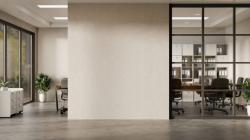 Noise is one of the most common challenges created by modern workplaces. Open-plan offices can make collaboration easier, but they can also allow conversations, telephone calls, meetings and general activity to spread through areas where other employees are trying to concentrate.
Commercial partition walls can help improve workplace acoustics by separating activities and reducing the amount of sound passing directly between different areas. However, simply putting up a partition does not automatically create a quiet room. The type of partition, its construction, seals, height and surrounding building structure all influence how effectively sound is controlled.
For businesses planning a new office layout or looking to improve an existing workspace, understanding these factors can help determine whether partition walls are an appropriate part of the acoustic solution.
How do partition walls reduce noise in an office?
One of the simplest ways to understand the acoustic value of partitions is to think about how sound travels.
In an uninterrupted open-plan office, there may be very little physically separating one activity from another. A meeting taking place at one end of a room, for example, can remain clearly audible to employees working elsewhere.
Creating a physical barrier changes this sound path.
The Health and Safety Executive (HSE) notes in its guidance on workplace design and noise that screens, barriers and walls can be positioned between noise sources and people to stop or reduce direct sound. The HSE also recommends considering workplace layout and the separation of noisier operations from quieter areas.
In an office environment, partitions can therefore be used to create distinct zones for activities such as:
meetings and conference calls;
individual focused work;
collaborative team discussions;
training sessions;
reception and waiting areas; and
machinery, printing or other relatively noisy office functions.
The objective is not necessarily to eliminate all sound. Instead, a well-planned layout can prevent every activity from contributing equally to the background noise experienced throughout the workplace.
What is the difference between sound absorption and sound insulation?
These two terms are sometimes used interchangeably, but they describe different aspects of acoustic performance.
Sound insulation controls sound travelling between spaces
Sound insulation relates to reducing the amount of sound transmitted from one room or area into another.
For example, a meeting room positioned next to an open office may need sufficient sound insulation to prevent normal conversations from becoming distracting outside the room.
A partition wall forms part of the physical separation between these spaces. Its construction, mass, joints and seals can all influence how much sound travels through it.
Acoustic movable walls and other specialist partition systems can be designed with sound reduction in mind, making them particularly useful when businesses need both flexible layouts and meaningful separation between areas.
Sound absorption controls reflections within a room
Sound absorption is slightly different.
Hard surfaces such as glass, plasterboard, concrete and some flooring materials can reflect sound around a room. In a large office containing many reflective surfaces, conversations and other noises may linger and overlap, increasing the general level of reverberation.
Absorptive materials help reduce those reflections.
The HSE explains that using absorptive materials within a building can reduce reflected or reverberant sound, although they do not necessarily prevent direct sound transmission.
This means businesses should consider the office as a complete acoustic environment rather than expecting one product to solve every issue. Partition walls may be combined with suitable ceilings, flooring, furniture, acoustic panels and thoughtful workspace planning.
Which commercial partitions offer better acoustic performance?
Not every partition system provides the same degree of sound separation.
The appropriate choice depends on what the divided spaces are used for and how much acoustic privacy is actually required.
Movable walls
Movable walls can be particularly useful where strong separation is required but rooms still need to be reconfigured.
These systems generally consist of substantial individual panels that move along a track before being positioned together to form a continuous dividing wall. Properly specified systems can include acoustic features and seals intended to reduce sound transmission between the spaces on either side.
They may suit conference facilities, larger meeting spaces, offices and training environments where a large room periodically needs to function as two separate areas.
Crucially, businesses should specify the required acoustic performance when planning the project rather than treating it as an afterthought.
Sliding partition walls
Sliding partitions provide another way to separate areas without permanently changing the floor plan.
Depending on the particular system and specification, they can provide useful acoustic separation while allowing the room to be opened again when a larger shared area is required.
This flexibility can be particularly valuable in workplaces where teams regularly change size or rooms have several functions throughout the working week.
Glazed partitions
Glass is often chosen to retain natural light and visibility between spaces. This does not necessarily mean businesses have to abandon acoustic considerations.
Suitable glazed partition systems can provide sound insulation while retaining the open appearance many contemporary offices favour.
The important consideration is the whole system rather than the glass alone. Frames, doors, joints and seals can create routes through which sound travels, so the specification needs to reflect the intended level of privacy.
A glass meeting room used occasionally for informal discussions, for example, may have different requirements from a boardroom regularly used for confidential conversations.
Folding and other flexible partitions
Folding partition systems can also provide useful separation between working areas.
Their suitability depends on the acoustic expectations of the space. A lightweight divider intended mainly to provide visual separation should not be expected to perform in the same way as a purpose-specified acoustic movable wall.
Businesses should therefore begin with the result they need rather than choosing a system purely according to appearance or operating style.
What factors affect the acoustic performance of a partition?
Acoustic performance depends on considerably more than the visible wall panels.
Sound can travel through gaps and around structures, meaning the effectiveness of a partition is influenced by how the complete room has been designed.
Several considerations are particularly important.
The partition specification: Different systems are designed for different levels of sound reduction. If acoustic privacy matters, this should form part of the initial specification.
Seals and joints: Sound can exploit small gaps. How panels meet one another, the floor, ceiling and adjoining walls can therefore have a significant effect.
Doors: A highly specified partition may still perform poorly if an adjoining door allows sound to pass easily around its edges.
Ceiling construction: If a partition stops at a suspended ceiling while the void above remains open, sound may travel over the partition through that space.
Floor construction: Raised floors and other structural details can create similar indirect sound paths.
Adjacent construction: Acoustic separation ultimately depends on the complete boundary between two rooms, not only the partition itself.
Installation quality: Even a well-designed system relies on appropriate fitting, adjustment and sealing to achieve its intended performance.
This is one reason acoustic requirements are best considered during the planning and specification stages of a partition project.
Can partitions reduce distractions in open-plan offices?
They can, particularly where workplace noise is mainly created by competing activities.
Imagine an office containing 40 employees. Some are making telephone calls, others are holding informal meetings and several need uninterrupted time for concentration.
Keeping all of those activities in a single open area means each group contributes to everybody else’s acoustic environment.
A better approach may be to create separate spaces according to how they are used.
Meeting rooms can contain discussions. Smaller rooms can provide places for calls or focused work. Collaborative areas can remain open where conversation is expected.
Commercial partition walls allow businesses to create these boundaries without necessarily moving premises or fundamentally changing the building.
Flexible systems can take the idea further by allowing those boundaries to change.
A training room might be divided into two meeting rooms in the morning and reopened for a larger presentation in the afternoon. Instead of designing the entire floor around its busiest or largest occasional requirement, the available space can adapt to actual demand.
Do acoustic partitions make an office completely soundproof?
Usually, “soundproof” is not a helpful way to describe normal workplace partitioning.
Complete isolation of sound is a demanding objective that involves the entire construction of a space. Floors, ceilings, ventilation systems, doors, glazing and structural connections can all provide transmission paths.
Most workplaces instead need an appropriate level of sound reduction.
That requirement can vary considerably.
A casual breakout area may simply need enough separation to reduce distractions. A meeting room may require conversations to be less intelligible outside. A room used for confidential discussions may require a substantially higher level of acoustic privacy.
Defining that requirement early makes it easier to identify an appropriate system.
It also prevents a common specification problem: choosing a partition based primarily on appearance and discovering afterwards that it does not provide the acoustic separation users expected.
When should businesses consider acoustic partitions?
Acoustic performance should become a priority whenever sound passing between areas could interfere with how those spaces are used.
Typical examples include meeting rooms next to desks, interview rooms, training facilities, management offices, conference spaces and areas occupied by teams making frequent calls.
Businesses should also consider future requirements.
An office that currently accommodates one team might later contain several departments with different working patterns. A flexible partition system can make it easier to adapt the layout while maintaining useful separation between activities.
Acoustics may be particularly important where privacy matters. HR meetings, client discussions or commercially sensitive conversations may require more than simple visual screening.
The first question should therefore be: what needs to happen on each side of the wall?
Once that is understood, decisions about movement, appearance, glazing and acoustic performance become considerably easier.
Should acoustic performance be considered before installation?
Yes. Acoustic expectations should ideally be discussed at the beginning of the project.
It is much easier to specify an appropriate partition and understand surrounding construction requirements before installation than to try to correct disappointing acoustic performance afterwards.
Businesses planning a partition should consider how frequently the wall will move, whether visual privacy is required, what activities will happen in the adjoining spaces and how much noise separation users expect.
The existing building also needs consideration.
Ceiling systems, floor construction, available support and the dimensions of the opening can all affect which partition systems are practical.
A-Door Additions assesses factors including the purpose of the space, opening dimensions, acoustic priorities and site constraints when helping clients identify suitable partition systems. Businesses that are unsure what level of separation they require can discuss their project with A-Door Additions before settling on a specification.
Frequently Asked Questions
Can partition walls stop people hearing conversations in the next room?
They can significantly reduce sound transmission when an appropriate acoustic system is correctly specified and installed. However, the result also depends on doors, ceilings, floors, seals and adjoining construction. Where speech privacy is important, the required level of acoustic separation should be established during specification.
Are glass office partitions good for sound insulation?
Glazed partitions can be specified to provide useful sound insulation while maintaining light and visibility. Performance varies between systems, and factors such as glazing configuration, frames, doors and seals matter. A specialist should therefore assess the complete partition rather than the glass in isolation.
Can an existing noisy office be improved without completely rebuilding it?
Potentially, yes. Reorganising the layout and introducing partitions to separate quieter activities from collaborative or noisier areas can form part of an acoustic improvement strategy. Other measures, including sound-absorbing finishes and changes to furniture or working arrangements, may also be beneficial depending on the source of the problem.
Commercial partition walls can play an important role in improving acoustics in busy workplaces, particularly when noise problems are caused by different activities sharing the same open space. The best results come from treating acoustics as part of the overall room design, taking account of the partition specification, seals, doors, ceilings and surrounding construction rather than relying on the wall panels alone.
A-Door Additions can advise on movable, sliding, glazed and other partition systems according to the practical and acoustic requirements of your workplace.
Phone: 01373 454577
Email: info@a-dooradditions.co.uk
Find out more: https://buildingadditions.co.uk/
Are Concertina Partitions a Budget-Friendly Partition Solution?
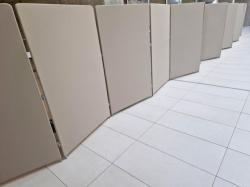 Concertina partitions are often considered a budget-friendly partition solution because they can divide space quickly, take up relatively little room when opened and are usually simpler than more substantial movable wall systems. For some settings, they can be a practical way to create flexible separation without committing to a permanent wall.
However, whether concertina partitions are genuinely cost-effective depends on the space, frequency of use, acoustic expectations, durability requirements and the impression the finished room needs to create. A lower initial price does not always mean better value if the partition struggles to cope with daily use or does not provide enough privacy.
For offices, community venues, schools, clinics and domestic interiors, concertina partitions can work well in the right circumstances. The key is to understand what they are best suited for and where a stronger folding, sliding or movable wall system may be the better long-term investment.
What Are Concertina Partitions?
Concertina partitions are folding room dividers that open and close in an accordion-style movement. Instead of moving as separate flat panels, the partition folds back on itself as it is drawn across the opening. This makes it useful for spaces where a simple, compact division is required.
They are commonly used to separate rooms temporarily, create privacy, section off multi-purpose areas or divide spaces that do not always need to remain enclosed. In some cases, they can be used in offices, halls, meeting rooms, schools, community buildings and homes.
The word “concertina” usually refers to the way the partition folds rather than one single material or specification. Some systems are light-duty and suited to occasional use, while others are more robust and designed for commercial environments. This distinction is important because not every concertina partition will perform in the same way.
Why Are Concertina Partitions Seen as Budget-Friendly?
Concertina partitions are often viewed as budget-friendly because they are generally simpler than full movable wall systems. They may use fewer complex components, require less substantial stacking space and offer a straightforward way to divide a room.
For organisations with limited budgets, this can make them attractive. A community hall, small office, church room, studio or domestic property may need a flexible divider but may not require a high-performance acoustic movable wall. In those cases, a concertina partition could provide enough separation at a lower overall cost.
They can also be budget-friendly because they help make better use of existing space. Instead of renting additional rooms, extending a building or creating permanent internal walls, a concertina partition allows one room to perform more than one function.
For example, a small office could divide a shared workspace from a meeting area. A community venue could separate a refreshment area from an activity space. A home could create a temporary division between living and working areas. In each case, the value comes from improving the usability of space without major structural change.
Are Concertina Partitions Always the Cheapest Option?
Concertina partitions may be a cost-conscious option, but they are not always the cheapest once the full project is considered. The final cost can depend on the size of the opening, material quality, track requirements, installation complexity, finish, acoustic performance and whether any preparation work is needed.
A very basic divider may be inexpensive, but it may not be suitable for a busy commercial or educational environment. A higher-quality concertina system may cost more initially but perform better over time.
It is also important to consider lifecycle cost. If a cheaper partition is used in a demanding environment and needs frequent repairs, adjustment or early replacement, the apparent saving may disappear. In contrast, a more robust system may cost more at the start but offer better reliability and usability across several years.
Budget-friendly should not mean unsuitable. The right question is not simply “Which partition costs the least?” but “Which partition gives the best value for how this space will be used?”
Where Do Concertina Partitions Work Well?
Concertina partitions can work well in spaces where the main need is quick, occasional or moderate separation rather than high acoustic performance or a premium finish. They are particularly useful where flexibility is more important than creating a fully enclosed room.
They may be suitable for:
Community rooms, village halls and social spaces
Small offices, training rooms and meeting areas
Domestic living spaces, home offices and playrooms
Light-use education or activity areas
Rooms where privacy is useful but not highly sensitive
Spaces where the partition will be opened and closed occasionally rather than constantly
A concertina partition can also be useful in buildings where space is limited. Because the folding action allows the system to retract compactly, it can help keep the room open when the divider is not in use.
However, suitability depends on the exact product and installation. A partition that works well in a quiet office may not be right for a busy school hall or high-traffic venue.
How Do Concertina Partitions Compare with Folding Partitions?
Concertina partitions and folding partitions are closely related, but they are not always the same in performance or construction. Concertina partitions usually fold in a continuous, accordion-style action. Folding partitions may use larger hinged panels or more substantial sections that create a firmer division when closed.
A folding partition may offer a stronger appearance, better durability and improved acoustic performance depending on the system. This can make it more suitable for spaces that need regular use, a more professional finish or a more robust room division.
Concertina partitions are often chosen when simplicity and cost are key priorities. Folding partitions are often chosen when the space needs a stronger, more structured solution.
For example, a small community room that only needs occasional separation may suit a concertina system. A school hall that needs to divide daily for lessons, lunch, assemblies and after-school activities may benefit from a more durable folding partition.
The decision should be based on practical use. If the partition will be moved frequently, handled by different staff members or exposed to heavy wear, a stronger folding system may provide better long-term value.
How Do Concertina Partitions Compare with Movable Walls?
Movable walls are typically more substantial than concertina partitions. They often consist of individual panels that move along an overhead track and lock into place to create a more solid division. Depending on the system, movable walls can offer better acoustic performance, a more premium finish and greater flexibility in how panels are stacked or arranged.
Concertina partitions are usually simpler. They may be quicker to operate and more economical, but they may not create the same level of separation as a high-quality movable wall.
In an office, for example, a concertina partition may be enough to screen off a small meeting area. A boardroom or training suite that requires confidential discussions and good acoustic control may be better served by a movable wall.
In a school or community hall, a concertina partition may divide a light-use space effectively. A large multi-purpose hall with simultaneous activities may need a stronger acoustic movable or folding system.
This does not mean concertina partitions are inferior. It means they serve a different purpose. They are best used where expectations are realistic and the system matches the environment.
Do Concertina Partitions Provide Good Sound Insulation?
Sound insulation is one of the main areas where expectations need to be managed. Some concertina partitions can help reduce noise and provide a degree of acoustic separation, but they are not usually the best choice where high sound insulation is required.
If two spaces need to be used at the same time for focused work, lessons, meetings or confidential conversations, acoustic performance becomes more important. In those cases, a higher-performing folding partition or movable wall may be more suitable.
Sound reduction depends on several factors, including the partition material, seals, track, installation quality, ceiling construction and surrounding walls. A partition alone cannot solve every acoustic issue if sound travels through ceiling voids, gaps or adjacent surfaces.
The Department for Education’s Building Bulletin 93 highlights the importance of acoustic design in schools, including performance standards for teaching and learning spaces. While this guidance is specific to schools, it illustrates why sound control should be treated seriously where people need to hear, concentrate or communicate clearly: https://www.gov.uk/government/publications/bb93-acoustic-design-of-schools-performance-standards
For settings where privacy or concentration matters, acoustic requirements should be discussed before choosing a concertina partition.
Are Concertina Partitions Durable Enough for Commercial Use?
Concertina partitions can be suitable for commercial use, but durability depends on the system chosen and how often it will be used. A light-duty product may be fine for occasional use in a small meeting room, but it may not be suitable for daily use in a busy venue.
Commercial spaces often expose partitions to heavier wear than domestic settings. Staff may open and close the partition regularly, furniture may be moved nearby, and visitors may come into contact with the panels. In schools and community buildings, the level of everyday use can be even higher.
A commercially suitable concertina partition should feel stable, operate smoothly and have finishes that can cope with normal wear. The track, handles, seals and folding mechanism should be appropriate for the expected use.
If the partition will be used frequently or is likely to be handled by multiple people, it may be worth considering whether a more robust folding or movable system would be better value.
Are Concertina Partitions Suitable for Homes?
Concertina partitions can be useful in homes where a flexible, space-saving divider is needed. They may help separate a home office from a living area, divide a dining space, create a play area or provide occasional privacy in an open-plan layout.
In domestic interiors, the priorities may be different from commercial settings. Appearance, ease of use and compact storage may matter more than heavy-duty durability. A partition may only be used at certain times of the day, such as during remote working or when guests visit.
For homeowners exploring flexible room division, domestic partition walls can provide useful ideas for adapting internal space without permanently changing the layout.
However, even in a home, quality still matters. A poorly specified divider can feel awkward, flimsy or visually out of place. The partition should suit the room’s style, opening size and daily routine.
Can Concertina Partitions Look Professional?
Yes, concertina partitions can look professional when chosen and installed carefully. Modern systems can be far more refined than older-style temporary dividers. Finishes, colours, panel materials and track details can all affect the final appearance.
That said, concertina partitions may not always create the same premium feel as a glazed partition, wooden system or high-spec movable wall. If the partition will be in a reception area, client-facing meeting room or design-led interior, appearance may carry more weight.
In these cases, it may be worth comparing different systems. Wooden partitions, glazed sections or more substantial folding systems may provide a stronger visual finish while still supporting flexible space division.
A budget-friendly option should still look appropriate for the setting. In a professional environment, the partition becomes part of the room’s presentation, not just a functional divider.
What Are the Main Limitations of Concertina Partitions?
Concertina partitions can be useful, but they are not the right answer for every project. Their limitations usually relate to acoustic performance, durability, appearance and suitability for high-use environments.
The main limitations to consider are that they may not provide strong sound insulation, may not feel as substantial as other systems, may be less suitable for heavy daily use and may offer fewer premium finish options than some alternatives.
They may also be less appropriate for spaces where privacy is critical, such as confidential consultation rooms, boardrooms or clinical environments. In those situations, a more robust acoustic or solid partition system may be better.
Understanding these limitations does not rule out concertina partitions. It helps ensure they are used in the right places.
When Is a Concertina Partition the Right Choice?
A concertina partition is often the right choice when the space needs practical, occasional separation and the project has a defined budget. It is best suited to environments where flexibility is important but high acoustic performance or heavy-duty construction is not the main priority.
It may be a good option for a small office meeting area, a community room, a home office division or a multi-use space with moderate use. It may also suit projects where the aim is to improve space efficiency without major building work.
A concertina partition may be less suitable where the space is used intensively, where sound control is essential or where a premium design finish is needed. In those cases, folding partitions, sliding partitions or movable walls may provide better long-term performance.
What Should You Consider Before Choosing a Budget-Friendly Partition?
Before deciding whether a concertina partition is the right budget-friendly solution, it is worth looking beyond the initial price. The most cost-effective option is the one that performs reliably for the intended use.
Consider how often the partition will be moved, who will operate it, how much sound separation is needed, whether the room is public-facing, how durable the finish needs to be and whether the partition must match existing interiors.
It is also worth thinking about future use. A room may only need occasional separation now, but if the building becomes busier or the space is repurposed, the partition may need to work harder. Choosing a slightly more robust option at the start can sometimes avoid problems later.
Professional advice can help compare the practical differences between concertina, folding, sliding and movable partition systems before a decision is made.
Frequently Asked Questions
Are concertina partitions cheaper than movable walls?
Concertina partitions are often cheaper than more substantial movable wall systems, but the final cost depends on size, finish, specification and installation. The best option should be chosen based on suitability, not price alone.
Can concertina partitions reduce noise?
Concertina partitions can provide some separation and may help reduce general noise, but they are not usually the best choice where high sound insulation is required. Acoustic folding or movable walls may be more suitable for confidential or simultaneous room use.
Are concertina partitions suitable for schools?
Concertina partitions may be suitable for some light-use educational areas, but busy school halls and classrooms often need more robust systems. Durability, safety and acoustic performance should be reviewed carefully before installation.
Final Thoughts
Concertina partitions can be a budget-friendly partition solution when they are used in the right setting. They are practical, space-saving and often more economical than heavier-duty systems. For community rooms, small offices, home interiors and moderate-use spaces, they can offer useful flexibility without major building work.
However, they are not always the best choice for demanding environments. If a space needs strong acoustic performance, frequent daily operation, a premium finish or high durability, a folding, sliding or movable partition system may provide better long-term value.
The most important step is to match the partition to the room’s real use. A good budget-friendly solution should still be practical, reliable and appropriate for the people using the space.
For advice on concertina, folding, sliding and movable partition options, contact A-Door Additions to discuss the most suitable approach for your project.
Phone: 01373 454577
Email: info@a-dooradditions.co.uk
Find out more: https://buildingadditions.co.uk/


