
THE FLYSCREEN COMPANY LTD
UNIT 4 WARREN BUSINESS PARK
KNOCKDOWN
TETBURY
GLOUCESTERSHIRE GL8 8QY
Tel: 01454 238288
Fax: sales@flyscreen.com



Suppliers of: fly screens, flyscreens, insect mesh, fly mesh, insect screens, window fly screens, door fly screens, cladding insect mesh
Based in Gloucestershire, UK, The Flyscreen Company has established itself as a leading supplier of fly screens and other insect preclusion products within the UK and international market. Recommended by Environmental Health Officers as an approved method of disease prevention, our products are designed to provide effective, unobtrusive and hygienic protection against flying insects.
Commercial Products:
Our commercial range of products are hard wearing and robust and can stand up to the every day rigors of a commercial environment. They are ideally suited for kitchens, factories, warehouses and any other industrial building that need to keep flying insects out. We are happy to supply some products as kits, where as other products we will make Made-To-Measure to your exact measurements . Please contact us for a competitive quote or if you need advise on which product would best suit your needs we will be happy to help there too.
Domestic Products:
We manufacture and supply a wide range of domestic flyscreens which include, aluminium hinged door screens, aluminium sliding door screens, aluminium window screens, insect panel curtains, slim line roller door and window screens, wind resistant roller door and window screens, magnetic PVC window screen. Please browse the products and if you are still unsure which is most suitable for your needs, please contact us via email or phone and we will be more than happy to assist.
Made to Measure Products:
All our Made-To-Measure products are manufactured to your exact measurements. The screen selection guide will help you to choose the correct product and the measuring guide will help you make sure your measurements are correct and accurate. When you know what product you want click on ’Add to Quote’ and enter your measurements and quantities. Once you submit your quote request we will get back to you as quickly as we can with the quote and a delivery date. If you wish to proceed we will get in touch for your payment details.
Further technical information is available to download from the BPi download Library or from the Manufacturer’s own website.
The Flyscreen Co - Spider season is here
 Spider season is here — but first things first: there are no spider photos in this blog. You are safe to scroll.
If September seems to bring an alarming increase in eight-legged visitors around the home, you are not imagining it. And, as a fellow spider hater, I would also quite like to know why they suddenly seem to be everywhere.
Late summer and early autumn are commonly associated with increased spider activity in the UK, particularly inside homes. While spiders may have been present throughout the year, they become much more noticeable at this time as they move around in search of mates and suitable shelter.
So, unfortunately, there is a reason September has earned a reputation for being spider season. The good news is that there are a few practical ways to make your home a little less welcoming.
Why Do You See More Spiders in September?
Spiders do not suddenly appear when summer ends. Many have been living quietly in gardens, sheds, garages and less disturbed areas of the home for months.
During late summer and early autumn, however, some species become much more active. Male house spiders in particular begin travelling further in search of females, which is why they are more likely to be spotted running across floors, climbing walls or appearing unexpectedly in bathrooms and bedrooms.
Lovely.
Research from the University of Gloucestershire found that UK house spider sightings peaked around mid-September, with males making up more than 80% of sightings.
This increased movement is one of the main reasons September has become known as “spider season” in the UK.
Are There Actually More Spiders in Autumn?
Not necessarily.
In many cases, there are not suddenly more spiders around your home. They are simply moving more and becoming easier to notice.
Which, admittedly, is not especially comforting when one is sprinting across the carpet.
Spiders may also move indoors or towards sheltered areas as temperatures begin to change. Open windows and doors, gaps around frames and other small openings can all provide access.
Why Do Spiders Come Into Houses?
There are several reasons spiders may enter or remain inside a property.
They may be searching for a mate, looking for shelter or following the insects they feed on.
Homes can provide plenty of suitable hiding places, particularly in quieter areas such as behind furniture, around window frames, in cupboards or in garages and utility rooms.
The insects inside your home can also make it an attractive place for spiders. Flies, mosquitoes, moths and other small insects all provide a potential food source.
In other words, keeping other insects out may also make your home slightly less appealing to their eight-legged predators.
Can Flyscreens Help Keep Spiders Out?
Flyscreens can help reduce one of the routes spiders and other insects may use to enter your home.
A properly fitted insect screen allows you to keep windows and doors open for ventilation while providing a physical barrier across the opening. Different types of insect mesh are available depending on what you need the screen to protect against.
However, we would never claim that a flyscreen can completely spider-proof a property. Spiders are frustratingly good at finding their way through gaps around doors, vents, cracks and other openings, so screening windows and doors should be considered one part of a wider approach.
Flyscreens can also help reduce the number of flying insects entering your home. As these insects are a food source for spiders, keeping them outside may make indoor spaces less attractive.
Will this guarantee you never encounter another spider? Sadly, no.
Can it remove one obvious entrance route while also keeping flies, moths and mosquitoes outside where they belong? Absolutely.
How to Reduce Spiders Getting Into Your Home
There are a few simple steps that may help reduce the number of spiders you encounter indoors.
Check windows and doors for gaps, particularly around frames and seals. Small openings can provide easy access for spiders as well as other insects.
If you already have flyscreens fitted, check the mesh for tears, loose edges or damage that may have developed over the summer. It is also a good time to give your screens a clean and carry out a little basic maintenance.
Keeping windows screened allows you to continue ventilating your home without leaving a completely open route for insects.
It can also help to reduce clutter around windows, doors and darker corners where spiders may be more likely to settle.
Outdoor lighting can attract flying insects towards doors and windows, so where possible, avoid leaving bright lights directly beside open entrances for long periods.
None of this requires getting particularly close to a spider, which is always a bonus.
Contact: sales@flyscreen.com
The Flyscreen Co - Insect Mesh Types
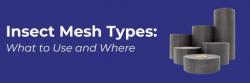 Understanding the different insect mesh types can help you choose the right balance of insect protection, airflow and durability. When choosing a flyscreen, it is easy to think all insect mesh works the same way. If it keeps flies out, what else matters?
In reality, different insect meshes are designed for different situations. Some are ideal for everyday home use, while others are better for smaller insects, reducing pollen, commercial settings or pest proofing. The right choice depends on what you want to keep out, where the mesh will be used and how durable it needs to be.
Understanding the different insect mesh types can make it easier to choose the right option for your home, workplace or commercial premises. This guide explains the most common insect mesh types and where they are typically used.
Standard Insect Mesh
Standard insect mesh is the most common choice for general flyscreens. It helps keep out flies, wasps, mosquitoes and other everyday flying insects while still allowing fresh air into the room.
This mesh is commonly used in made-to-measure flyscreens for windows, doors and other openings. It is a practical option for homes, offices, kitchens, cafés and many other settings where insect control is needed in warmer months.
Standard insect mesh is a reliable everyday option if you want to keep insects out without restricting ventilation.
Midge Mesh
Midge mesh is a finer mesh designed to help keep out smaller insects, including midges. It is especially useful in places where midges are common, such as rural areas, locations near water, or parts of the UK where smaller biting insects are more active.
Because midge mesh has smaller gaps than standard insect mesh, it provides better protection against tiny insects. However, finer mesh may slightly affect airflow and visibility.
Midge mesh is worth considering if smaller insects are getting through ordinary flyscreen mesh.
Pollen Mesh
Pollen mesh helps reduce airborne pollen entering through open windows and doors. It can be useful for hay fever sufferers who want fresh air with less pollen indoors.
Pollen mesh does not remove pollen from the home completely, as pollen can still come in on clothing, pets, shoes and other surfaces. However, it can reduce pollen entering through screened openings, making it useful in spring and summer.
Pollen mesh may be especially helpful in bedrooms, living areas or home offices where you want greater comfort while still ventilating the space.
Stainless Steel Mesh
Stainless steel mesh is stronger and more durable than standard insect mesh. It is often used in commercial, industrial and pest control settings where a tougher material is needed.
This mesh suits areas that need extra durability, including food preparation areas, commercial kitchens, warehouses and other environments where hygiene and pest prevention are important.
Stainless steel mesh is also useful where long-lasting performance is needed or where conditions are more demanding than a typical domestic window or door screen.
Rodent and Pest Proofing Mesh
Rodent and pest proofing mesh differs from standard flyscreen mesh. Instead of being used mainly in window and door screens, it helps block gaps, vents, holes and other entry points where pests could enter a building.
This mesh can be useful around pipework, air bricks, cladding gaps, soffits and other small openings. It is often used as part of a wider pest prevention approach to reduce access points for rodents and other pests.
When using pest proofing mesh, choose a material suited to the location, especially where strength, durability and weather exposure are important.
How to Choose Between Different Insect Mesh Types
The best insect mesh depends on the problem you need to solve.
For everyday protection against flies, wasps and mosquitoes, standard insect mesh is usually suitable. If very small insects are the issue, midge mesh may be better. For hay fever sufferers, pollen mesh can help reduce pollen entering through open windows and doors. For commercial or more demanding environments, stainless steel mesh may be more appropriate. For blocking gaps and potential pest entry points, rodent or pest proofing mesh is likely to be the best choice.
It is also worth considering where the screen will be fitted, how often it will be used and whether the area is domestic, commercial or exposed to heavier wear.
For food businesses, GOV.UK guidance states that windows and doors opening to the outside should be fitted with insect-proof screens that can be easily removed for cleaning.
Can Insect Mesh Be Used Around Pets?
Customers sometimes ask whether insect mesh is pet-proof. While some heavier meshes are more durable than standard mesh, we would not usually describe standard flyscreen mesh as pet-proof or pet-resistant.
If pets may scratch, push or lean against a screen, mention this when asking for advice. This helps us recommend the most suitable screen and mesh option for your situation.
Need Help Choosing the Right Mesh?
With several insect mesh types available, the best option is not always obvious. The right choice depends on the insects or pests you want to keep out, where the mesh will be fitted and whether the screen is for domestic or commercial use.
Comparing the available options can help you find the right balance of protection, airflow and durability without relying on a one-size-fits-all solution.
If you are unsure which insect mesh you need, please get in touch. We will be happy to talk through your options and help you find a suitable solution for your home, workplace or commercial premises.
Contact email : sales@flyscreen.com
Telephone contact: 01454 238288


