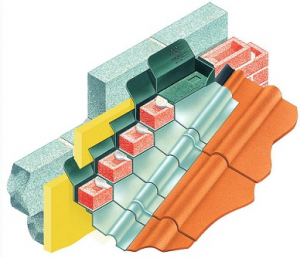
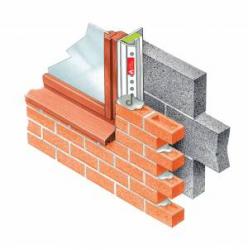
CAVITY TRAYS LTD
ADMINISTRATION CENTRE
BOUNDARY AVE
LUFTON TRADING ESTATE
YEOVIL
SOMERSET BA22 8HU
Tel: 01935 474769
Fax: enquiries@cavitytrays.co.uk



Suppliers of: Cavity tray, Cavity tray unleaded, Cavity tray with lead, Cavity tray horizontal, Cavity tray refurbishment, Cavity tray gable abutment, Cavity tray conservatory, Cavity tray building regulations, Cavity tray NHBC, Cavity tray non combustible
Cavity Trays Ltd -Manufacturers of Cavity trays, DPCs, Radon Protection, Roof ventilation products & Cavity closers.
The only cavity tray manufacturer awarded European Technical Approval (ETA).
Useful Resources:
- Online Seminars Available: Click Here
- NBS Specifications Available: Click Here
Main Product Ranges:
Damp Proofing Products:
A wide selection of Cavity Trays, profiled DPCs and ancilliary products for all construction methods. Cavity trays can be supplied in all sizes and shapes from load bearing lintels to masonry support systems. Damp proofing Courses (DPCs) are available in preformed & profiled systems to provide excellent Damp Proofing Solutions. Other products include weep vents, flashings, remedial products and arresting barriers for all damp proofing problems.
Radon Products:
Cavity trays can also supply an extensive range of Membranes for all applications. These include: * Contaminated Land Gas Reception Sump * Gas and Water Outlets and Service Entry Points * Methane Barriers * Radon (Cavity) Barriers * Service Pipe Entry Seals (top hats) * Type N Sitesealer Membrane
Ventilation Products:
Cavity Trays supply a wide range of products to solve ventilation problems on all contruction projects. Products include: Air bricks, sleeves, Ventilators, Roof vents, roofline Ventilation for Soffits, eaves and Fascias.
Associated Products:
Cavity Trays offer a wide range of associated products to include: Masonry Attachment Profiles, Loft access doors & hatches, Eaves Protection, Bonding strips and valley gutters.
Cavity Closer Ranges:
Cavity Trays supply a wide range of Cavity Closers for all construction & refurbishment methods. Products include: Bespoke Traditional Cavity Closers, Fire integrity stops & barriers, Acoustic barriers, waterproof barriers, insulated cavity closers & barriers.
Non-Combustible Cavity Tray Systems
The Non-Com Cavity Tray is a maintenance-free Non-Combustible cavity tray system manufactured by the longest established UK cavity tray manufacturer. Manufactured using Grade A1 Non-Combustible 304/316 austenitic stainless steel, the Non-Com trays protect against damp ingress and provide a fire barrier protection.
The Non-Com range of cavity trays provides Document B compliant class A1 Non-Combustible cavity protection in buildings.
Trays are supplied in standard lengths with accompanying junctions, angles and steps, all of which interconnect to form continuous run protection. The Non-Com harmonizing component range enables adjustable interconnecting. Accordingly, positioning with adjacent elements can always be optimised. Variances and wastage need not arise. Cavity Trays are available for changes of level, window and door openings, cavity barrier protection, horizontal intersections, stepped, staggered and angled masonry turns.
Main Product categories:
Cavity tray, Cavity tray unleaded, Cavity tray with lead, Cavity tray horizontal, Cavity tray refurbishment, Cavity tray gable abutment, Cavity tray conservatory, Cavity tray building regulations, Cavity tray NHBC, Cavity tray non combustible, Cavity tray NBS, Cavity tray flat roof, Cavity tray pitched roof, Cavity tray roof abutment, Cavity tray retrofit, Cavity tray rendered wall, Cavity tray roof, Weep, Weep rendered wall, Weep adjustable
Cavity Trays - Raft Construction: A Rising Barrier Guide
 When site conditions call for raft construction, builders often face a conflict between structural, waterproofing, and acoustic design requirements. The challenge intensifies when a timber separating wall is part of the construction.
According to Robust Details E-WT-2 TM (October 2011, detail 7), one traditional approach involves forming a channel cast into the raft to act as a water diversion path. This “emergency canal” is designed to contain or redirect water if leakage occurs in the accommodation on one side of the separating wall, theoretically preventing the spread of water to the adjoining dwelling.
However, in practice, this approach presents several significant issues.
The Limitations of Raft Channel Construction
Forming a channel into the raft introduces cost, complexity, and uncertainty. Its ability to handle significant water volumes is limited, and the discharge route is often unclear.
In theory, the channel allows water to flow into the perimeter wall cavity. But when contaminated land barriers are required such as protection against radon, methane, or carbon dioxide, these barriers typically seal the cavity, blocking the water’s exit path.
The result? Water becomes trapped with no practical way to drain, increasing the risk of saturation and long-term damage.
Furthermore, in order for water to reach this central channel, it must first pass through the separating wall construction. This often means saturating timber framework and insulation materials not designed to withstand partial or prolonged submersion.
An Advanced Alternative: Upward-Rising Party Wall Barriers
At Cavity Trays, innovative party wall and separating wall barrier systems have been developed to overcome these problems.
Instead of channelling water downward into the raft, these systems create a mid-wall water arrestment barrier that rises vertically. By rising upward rather than descending, the barrier can contain greater water volumes and prevent ingress into the wall assembly itself.
Crucially, this upward-rising configuration also allows the barrier to over-sail contaminated land gas membranes that project into the perimeter wall cavity. The design therefore avoids the compatibility conflicts that typically occur between waterproofing and gas protection requirements.
The Type PWRB: Dual Upstand Party Wall Rising Barrier
The latest evolution in this technology is the Type PWRB (Party Wall Rising Barrier) a new design from Cavity Trays Ltd that refines the concept even further.
This next-generation system features two vertical upstands positioned against the plasterboard faces on both sides of the separating wall. In the event of internal flooding, these upstands act as miniature dams, preventing water from penetrating the wall assembly at all.
Because the acoustic flanking strip (minimum 5mm) can still be installed directly against the barrier surface, the acoustic performance of the separating wall remains unaffected.
Additionally, since the Party Wall Rising Barrier is manufactured from solid DPC-grade material, the use of a separate damp-proof course beneath the timber frame sole plates can be eliminated. This single integrated solution therefore serves multiple functional purposes; water arrestment, damp-proofing, and acoustic compatibility.
Benefits of the Type PWRB
No need for raft-formed channels, reducing site complexity and cost.
Improved flood resistance through dual upstand water containment.
Maintains acoustic integrity with flanking strip compatibility.
Eliminates redundant DPC layers, streamlining installation.
Compatible with gas barrier membranes, ensuring full system integration.
Quick and cost-effective to install on-site.
The Type PWRB from Cavity Trays represents a proven and practical solution to a long-standing construction dilemma how to unify waterproofing, gas protection, and acoustic performance within raft foundation builds.
Integrating Performance and Protection
By replacing the traditional raft channel with an upward-rising, dual-upstand barrier, Cavity Trays provides a smarter and more resilient way to protect separating walls in raft construction.
In the event of internal ground floor flooding, the barrier prevents water from reaching the separating wall in the first place, minimising damage and preserving the integrity of the structure.
For detailed technical guidance, refer to Cavity Trays Resources or contact our technical team for advice on party wall rising barriers and raft construction waterproofing solutions.
Get in touch with Cavity Trays today
Call our team on 01935 474769 or email enquiries@cavitytrays.co.uk
Overwhelmed Wet Walls? How Saturated Masonry Causes Damp Problems in Cavity Walls
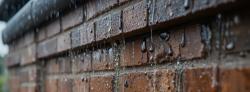 Can Masonry Walls Become Overwhelmed by Water?
Many homeowners assume brickwork and masonry walls naturally resist rain. But during prolonged storms, cavity wall masonry can become saturated, allowing water to migrate through the structure if proper damp-proofing measures are not in place.
This question became particularly relevant after severe UK winter storms, when property owners began noticing damp walls despite modern construction techniques.
The reality is simple: masonry can become overwhelmed when exposed to continuous rainfall and high winds. Without effective cavity tray systems and damp proof courses (DPCs), water that penetrates the outer wall can travel freely within the cavity and eventually cause internal damp issues.
How Rain Penetration Tests Compare to Real UK Weather
Bricks used in construction are often tested for rain penetration under standards such as BS 4315. During testing, water is sprayed at a rate of 2.5 litres per minute over a defined area.
However, there is an important detail often overlooked.
The test spray does not run continuously. Instead, it operates for one minute followed by roughly thirty minutes of pause, repeated over a 48-hour period.
In reality, this means the masonry may only receive around 90 minutes of actual water exposure during the entire test.
In contrast, the UK climate regularly produces extended periods of wind-driven rain lasting many hours or even days. Under these conditions, brickwork may become fully saturated, allowing water to enter the cavity wall system.
This is not a failure of the masonry itself, it simply demonstrates why proper cavity wall damp protection is essential.
What Happens When Brickwork Becomes Saturated?
Once masonry absorbs large amounts of water, two significant problems can occur:
Increased Water Movement Through the Cavity
When the outer brick skin becomes saturated, water can migrate through mortar joints and into the cavity space. Without adequate control measures, this moisture may reach structural elements or internal finishes.
Reduced Thermal Performance
Wet masonry conducts heat more efficiently than dry masonry. In practical terms, this means a saturated external wall can significantly increase heat loss, particularly during cold and windy weather.
This combination of moisture ingress and thermal inefficiency highlights the importance of effective building envelope design.
Why Cavity Trays Are Essential for Damp Control
To manage rain penetration in cavity walls, two key actions must occur:
Arrest water movement
Safely discharge water back outside the structure
This is the role of cavity trays and damp proofing systems.
Installed at critical junctions, such as above openings, roof abutments and structural transitions, cavity trays intercept water travelling within the cavity and redirect it to the exterior through weep vents.
Without these systems, trapped moisture may remain within the wall, increasing the risk of damp patches, insulation performance loss, and structural deterioration.
Protecting the Building Envelope with Advanced Cavity Tray Systems
As the longest-established cavity tray manufacturer in the UK, Cavity Trays of Yeovil has developed an extensive range of solutions designed to manage water migration within masonry cavity walls.
Modern tray systems incorporate features such as:
Anti-capillary water control
Integrated arrestment channels
Wider cavity compatibility
Preformed components for accurate installation
These design improvements help ensure water entering the cavity is captured, controlled and discharged quickly, reducing the risk of walls becoming overwhelmed during severe weather conditions.
Architects, builders and housing providers can explore these solutions within the Cavity Trays Product Range and supporting Resources, which provide detailed installation guidance for compliant cavity wall construction.
Why Water Management Is Critical in UK Construction
Given the UK’s exposure to persistent rainfall and strong winds, managing water penetration in masonry walls is essential.
A well-designed cavity wall system should:
Prevent water crossing from the outer skin to the interior
Provide clear drainage paths for moisture
Maintain insulation continuity
Protect the structural integrity of the building envelope
When these principles are followed, the risk of overwhelmed wet walls is significantly reduced.
Frequently Asked Questions
What causes wet cavity walls?
Wet cavity walls usually occur when rain penetrates saturated brickwork and enters the cavity, particularly during prolonged storms. Without cavity trays or damp proofing systems to intercept this moisture, it can travel further into the structure.
Can brick walls become saturated in heavy rain?
Yes. During extended periods of wind-driven rain, brickwork can become fully saturated. When this happens, water may migrate through mortar joints and into the cavity space.
Get in touch with Cavity Trays today
Call our team on 01935 474769 or email enquiries@cavitytrays.co.uk