



Suppliers of: Power Cables, VFD Cables, Armoured Cables, Electric Cables, Control Cables, wiring, electric wires
Top Cable is an internationally recognized manufacturer of electric cable, with offices and wharehouses located around the world. Our range of cables makes it possible to transfer energy in industrial installations, construction, infraestructure, transport, and many other industries. In general wherever it is necessary to ensure the supply of power.
We are a reliable European cable manufacturer
- Cable manufacturer warranty.
- Highly flexible cables.
- Cables engineered for greater durability and reliability.
- Cables designed to perform in all kinds of installations.
- International cable certificates.
- European CPR certificates.
Why choose Top Cable?
- High performance cables.
- Customer service.
- Wide range of cables.
- Worldwide logistics.
- Emergency stocks & express deliveries.
- Advanced supply chain solutions.
- Consultancy, engineering and turnkey projects.
- Help customers make the most environmentally friendly and economical choices.
Service makes the difference
- Prompt customer service.
- Advanced supply chain solutions.
- Fast manufacturing lead times for immediate deliveries.
- Project manage and developement.
- Tailor made cables for special requirements.
- Worldwide logistics adapted to customer’s needs.
- After-sales service support.
Cable performance, safety & respect for people and the environment
- Technology and Research center.
- Innovative teams.
- Improved safety environments.
- Product environmental profile.
- Cables combining energy efficiency, reduced CO2 emissions and safety.
- Sustainable and responsible development.
- Reduce environmental impact.
TYPES OF CABLES:
PANEL WIRE CABLES
High Quality Cables for Electrical Control Panels - Easy and safe installations.
XLPE/PVC POWER CABLES
Electric Power Cables for industrial installations.
ARMOURED CABLES
Power cables with steel wire or aluminium tape armour for optimum mechanical protection.
RUBBER CABLES
Extra-flexible rubber cables.
LSHF SAFETY CABLES
Halogen-free, low smoke and low corrosive gases emission in case of a fire. In compliance with Construction Products Regulation (CPR).
FIRE RESISTANT CABLES
Fire resistant power cable for emergency circuits.
CONTROL / SCREENED CABLES
Flexible control cables for fixed or mobile installations.
INSTRUMENTATION CABLES
Instrumentation cables for optimum data transmission.
SOLAR CABLES
Cables for photovoltaic installations.
SPECIAL CABLES
Electric cables for special applications.
ALUMINIUM CABLES
Aluminium cables for power transmission.
MARINE CABLES
A full range of power, control, instrumentation and low voltage marine cables. All of them available in armoured and unarmoured versions and also according to the fire performances: flame and fire retardant, and fire resistant.
RHZ1
Medium Voltage cable with XLPE insulation.
HEPRZ1
Medium Voltage cables with HEPR insulation.
RHVhMVh
Medium Voltage cables for special applications.
TSLF
Cable for fixed installations.
FR-N20XA8E-AR
Medium Voltage aluminium cable, XLPE insulation, halogen free.
Further technical information is available from the BPi download Library or from the manufacturers’ own website.
Top Cables : Fire safety cables for data centres
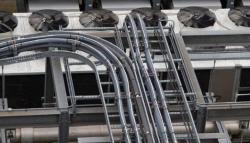 Fire safety cables for data centres: understanding B2ca, Cca, Dca ratings, and EN 50575 tests.
LSZH does not equal fire safety cables. B2ca, Cca and Dca cables are all halogen-free, but their fire performance under EN 50399 test varies significantly
How can data centre operators mitigate fire risk with cable selection? In a Data Centre, every second during a fire is critical. The cables installed throughout the facility can either help contain a fire or contribute to its spread. Understanding the differences between LSZH (Low Smoke Zero Halogen) B2ca, Cca, and Dca cables can minimize this risk, protecting people, safeguarding infrastructure, and reducing potentially enormous downtime costs.
The “LSZH” designation confirms that a cable will not release toxic halogen gases, when burning. However, it does not indicate how quickly fire spreads (FIGRA), how much heat the cable contributes (THR), or how much smoke is produced (TSP). These measurable performance criteria distinguish minimum compliance from high-performance fire safety cables.
INDEX
The CPR fire classification hierarchy
EU Construction Products Regulation (CPR) and EN 50575 norm rank cables based on strict fire testing standards:
B2ca (highest LSZH tier)
Cca (mid-tier LSZH)
Dca (minimum LSZH tier)
Key cable fire performance metrics
CPR classifications are based on rigorous fire tests:
EN 6033-2-1-2: vertical flame propagation test. This test verifies individual cables do not act as vertical “wicks” that carry fire through a building. All B2ca , Cca , Dca, must pass this baseline requirement.
EN 50399: the single burning item (SBI) test. This is the primary test that separates B2ca and Cca cables from Dca cables. Cables are bundled to similate real installations and measure:
Flame spread (how far flame spreads upward)
FIGRA (Fire Growth Rate Index) measures how fast a fire develops. A lower FIGRA significantly slows fire development, this can mean the difference between a contained incident and a facility-wide disaster in environments where cable densities are high.
B2ca ≤ 150 W/s
Cca ≤ 300 W/s
Dca ≤ 1300 W/s
THR1200s (total heat release in 20 minutes). Lower heat release protects people and equipment from severe damage.
B2ca ≤ 15 MJ
Cca ≤30MJ
Dca ≤ 70 MJ
Smoke production (s1, s2, s3 ratings) Total Smoke Production (TSP1200s) determines visibility during evacuation. Heavy smoke reduces visibility, creating life-threatening conditions in critical places like data centres.
B2ca-s1a and Cca-s1 ≤ 50 m². (maintain visibility at 10+ metres during fire conditions)
Dca-s3 > 400 m² (reduce visibility to under 3 metres during fire conditions)
Flaming droplets evolution (d0, d1, d2 ratings). No flaming droplets/particles lasting over 10 seconds (d0/d1) prevents the ignition of additional fires and stops fire spread. Flaming droplets/particles detaching from burning materials can ignite secondary fires, causing rapid fire spread throughout the building.
d0: No flaming droplets/particles within 1200 seconds
d1: No flaming droplets/particles persisting longer than 10 seconds within 1200 seconds
d2: No performance declared or does not meet d0/d1 criteria
EN 61034-2: smoke density test. This test measures optical smoke density when cables burn in a closed chamber:
**S1 rating (B2ca, Cca s1): **Light transmittance ≥ 60% (you can see through the smoke)
S2 rating (Cca s2): Light transmittance ≥ 60% but < s1 performance
S3 rating (Dca s3): Light transmittance < 60% (dense smoke)
EN 60754-2: Halogen acid content test (the “a” designation). This is what separates B2ca-s1a from Cca-s1 cables.
“a” designation (acidity) requires ≤ 0.5% halogen acid gas content
Non “a” cables can release up to 10x more corrosive gases
When cables burn, they release hydrochloric acid gas that reacts with sprinkler water to form indoor acid rain, corroding servers and equipment rooms. B2ca-s1a are halogen free, stopping this effect.
Why B2ca and Cca cables deliver superior fire protection
Within the LSZH category, B2ca and Cca specifications dramatically outperform Dca across five key parameters:
Slower fire growth
Lower heat release
Less smoke production
Less flaming droplets
Reduced corrosive emissions
These differences can determine whether a fire in a Data Centre remains contained or escalates into a major incident.
Why CPR classification matters in Data Centres
The LSZH label alone does not guarantee equivalent fire performance. Specifying CPR classification as part of a data centre’s passive fire protection strategy allows engineers and facility managers to align fire safety performance and operational risk and regulatory requirements.
The TOXFREE® LSZH N2XH Flex range, manufactured by Top Cable, is designed to meet B2ca and Cca fire safety cables classification requirements. For applications requiring electrical circuit continuity during a fire, Top Cable also offer fire safety cables designed to keep critical systems operational when it matters most.
TOXFREE®: The Data Centre-Grade LSZH Cable Solution
Don’t let the “LSZH” label create a false sense of equivalence. At Top Cable, we don’t compromise on fire safety. That’s why we exclusively manufacture and distribute LSZH cables with B2ca s1a,d1,a1 and Cca s1,d1,a1 ratings—never Dca.
Our TOXFREE® product range, including the TOXFREE® LSZH N2XH Flex, delivers the superior fire performance metrics that Data Centres demand: Every TOXFREE® cable delivers across all four parameters that matter most to data centre fire safety:
Controlled fire growth — FIGRA ≤150 W/s, giving your suppression systems and teams maximum response time
Minimal heat release — THR ≤15 MJ, limiting thermal damage to equipment inside and beyond the fire zone
Low smoke generation — TSP ≤50 m² with ≥80% light transmittance, preserving evacuation visibility and limiting smoke contamination of sensitive equipment
Zero corrosive gases — halogen acid content below 0.5%, eliminating the acid condensation risk that destroys equipment far beyond the fire origin point
For applications requiring electrical circuit continuity during a fire, we also offer fire safety cables designed to keep critical systems operational when it matters most.
When you specify Top Cable, you’re investing in the highest tier of fire safety engineering available in Europe.
Protect your infrastructure. Protect your people. Protect your business continuity. Contact Top Cable today to discuss B2ca and Cca LSZH cable solutions for your critical infrastructure project.
Choose Fire Safety cables. Choose Top Cable.
Frequently Asked Questions (FAQ)
What is data centre CPR cable classification?
CPR cable classification is the fire-performance rating assigned to cables under the EU Construction Products Regulation and tested to EN 50575. For a data centre, the relevant classes are B2ca, Cca and Dca, which grade how a cable behaves in a fire: how fast flame spreads, how much heat and smoke it releases, and whether it drips flaming particles.
What is a data centre B2ca cable?
A B2ca cable is the highest LSZH fire-performance class available for power and data cabling. In a data centre, B2ca cables deliver the slowest fire growth (FIGRA ≤150 W/s), the lowest heat release (THR ≤15 MJ) and minimal smoke, making them the preferred choice for high-density server rooms and critical infrastructure.
What is the difference between a Cca cable and a B2ca cable?
Both are LSZH classes tested under EN 50575, but a Cca cable sits one tier below B2ca. Cca allows a higher FIGRA (≤300 W/s) and more total heat release (≤30 MJ), so fire spreads faster and hotter than with B2ca. Cca still outperforms Dca cable by a wide margin, but B2ca remains the top-tier option for the most critical data centre areas.
Are all LSZH cables for data centres equally fire safe?
No. “LSZH” only confirms that a cable is halogen-free and won’t release toxic acid gas when it burns — it says nothing about how fast the fire spreads, how much heat it releases, or how much smoke it produces. B2ca, Cca and Dca are all LSZH, yet their fire performance under EN 50399 differs significantly, so the CPR class matters as much as the LSZH label.
What does EN 50575 require for cables installed in data centres?
EN 50575 is the harmonised standard behind the EU Construction Products Regulation. It defines the tests — including EN 60332-1-2 (flame propagation), EN 50399 (the single burning item test for FIGRA, heat and smoke release), EN 61034-2 (smoke density) and EN 60754-2 (halogen acid content) — used to assign a cable its Euroclass (B2ca, Cca, Dca, etc.) for construction works, including data centres.
What is a fire safety cable and how does it differ from an LSZH cable?
An LSZH (B2ca/Cca) cable is designed to slow fire growth, limit smoke and avoid toxic halogen gases, but it is not designed to keep working once it is on fire. A fire safety cable is built to maintain electrical circuit continuity during a fire, so critical systems such as alarms, emergency lighting or fire pumps keep operating for a defined period even as the cable burns.
What is TOXFREE cable?
TOXFREE® is our range of LSZH cables engineered specifically for data centre and critical infrastructure applications. Every TOXFREE® cable meets B2ca-s1a,d1,a1 or Cca-s1,d1,a1 ratings — we do not manufacture or distribute Dca cable — so every unit combines low smoke, low toxicity and controlled fire growth.
Why do data centre operators choose low smoke zero halogen cables over standard PVC cables?
Standard PVC cables release dense black smoke and corrosive halogen acid gases when they burn. Low smoke zero halogen cables avoid both problems: they preserve visibility for evacuation and for fire crews, and they don’t generate the hydrochloric acid gas that reacts with sprinkler water to corrode servers, racks and equipment rooms far from the source of the fire.
How does cable fire safety affect data centre uptime and downtime costs?
Cable fire safety is directly tied to business continuity. A cable that slows FIGRA and limits heat release buys suppression systems and staff more time to contain an incident before it spreads through cable trays and racks. Choosing higher-tier B2ca or Cca cable, or fire resistant cable where continuity is critical, reduces the risk of the extended downtime, equipment loss and corrosion damage that follow a major fire event.
What makes Top Cable a top tier cable supplier for data centres?
We exclusively manufacture and distribute B2ca and Cca LSZH cable — never Dca — for data centre applications. Our TOXFREE® range, including the TOXFREE® LSZH N2XH Flex, is built to the strictest FIGRA, THR, smoke and halogen-acid limits under EN 50575, and is complemented by a fire resistant cable range for circuits that must stay operational during a fire.
Top Cable launches Powerflex Ultra for Battery Energy Storage Systems
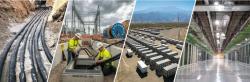 Flexible cable for BESS: Top Cable launches Powerflex Ultra for Battery Energy Storage Systems
Class 6 conductor, 90°C service temperature, 30-year service life and AD8 rating. A solution cable for BESS designed for utility-scale storage installations with demanding flexibility and durability requirements.
Guaranteed service life Short-circuit resistance Operating range Maximum DC voltage
30 years at 90°C 250°C −40 / +90°C 1,500 V DC
Cable for storage systems: why flexibility is a design parameter in BESS systems
In Battery Energy Storage Systems (BESS), cable density inside containers, power conversion systems (PCS) and electrical rooms is significantly higher than in other renewable generation installations. This concentration of conductors in confined spaces turns cable flexibility into a factor with a direct impact on installation efficiency and total construction cost.
Top Cable has designed the POWERFLEX® Ultra BESS, a low-voltage cable developed specifically for BESS applications. Unlike general-purpose cables adapted to this environment, the POWERFLEX® Ultra was conceived from the outset to meet the mechanical, thermal and electrical requirements of battery storage systems.
Cu class 6 conductor cable for BESS: construction design and mechanical performance
The superior flexibility of the POWERFLEX® Ultra BESS results from simultaneous interventions across the cable’s three structural components:
Conductor: flexible copper conductor, class 6 per IEC 60228, offering greater flexibility than the standard class 5 typically used in low-voltage cables.
Insulation: the insulation manufacturing process has been developed using Top Cable technology to maximize the cable’s mechanical performance.
Outer sheath: the outer sheath is based on a proprietary compound formulation, with notably greater flexibility than conventional thermoplastics used in power cables.
The coordinated action across these three elements determines the minimum bending radius, ease of routing through high-occupancy trays and ducts, and the cumulative mechanical fatigue over the cable’s service life. For engineering and project teams working on BESS infrastructure, this translates into a measurable reduction in labor hours during installation.
30-year service life at 90°C: thermal performance in Battery Energy Storage Systems
The POWERFLEX® Ultra BESS cable operates continuously across a temperature range of −40°C to +90°C. The certified service life is 30 years at a maximum service temperature of 90°C, a value that exceeds conventional PVC-based cables, which are typically limited to a continuous service temperature of 70°C and shorter design lives.
In short-circuit fault conditions, the cable withstands temperatures of up to 250°C, compared to roughly 160°C for standard PVC cables. This additional capacity is relevant in BESS infrastructure where safety against transient overloads is a system requirement.
1,500 V DC cable for string inverters and PCS: electrical specifications of the POWERFLEX® Ultra BESS
Rated AC voltage DC application Immersion rating UV resistance
1.8/3 kV Suitable for 1,500 V DC AD8 — permanent submersion According to EN 50618
The 1.8/3 kV AC version is suitable for use at 1,500 V DC, covering the requirements of string inverters and high-capacity power conversion centers in utility-scale projects. The cable can be installed direct-buried, in ducts, in conduits and outdoors without additional protection. The AD8 rating qualifies it for environments with risk of permanent water immersion.
Third-party certifications and European manufacturing
The POWERFLEX® Ultra BESS is manufactured entirely in Europe, at Top Cable’s plants near Barcelona. It holds certifications issued by independent bodies, providing a solid documentary basis for critical infrastructure projects.
AENOR · Bureau Veritas · KEMA-KEUR · CE Marking · UKCA Marking · EN 50618
UKCA marking availability allows commercialization in the UK market, which is relevant for engineering firms with project portfolios in the United Kingdom or facing approval requirements under post-Brexit regulation.
Visit our website and download our catalogue or contact to request a quote for your project!


