Building Overheating: Why Architects Choose Aluminium Solar Shading
 Rising Temperatures Demand Smarter Building Design.
The UK’s changing climate is creating new challenges for architects, designers and building owners. As summers become warmer and periods of extreme heat become more frequent, preventing buildings from overheating is now a key consideration in modern building design.
Recent summers have seen record-breaking temperatures across the UK, with The Met Office issuing multiple heat-health alerts. Many regions have also experienced prolonged periods of warm overnight temperatures, reducing the opportunity for buildings to naturally cool down.
As hotter and longer periods of summer weather become more common, the focus is shifting towards passive design strategies that improve thermal comfort, reduce energy consumption and help buildings perform more efficiently.
One of the most effective solutions is Aluminium Solar Shading.
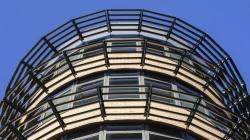
Aluminium solar shading system by Dales Fabrications installed on a building to reduce solar heat gain.
By stopping solar radiation before it reaches the building, solar shading significantly reduces unwanted solar heat gain while allowing natural daylight into internal spaces. This helps create more comfortable buildings, reduces reliance on mechanical cooling and supports compliance with evolving building regulations.
This guide explores the causes of overheating, the role of regulations such as Approved Document Part O and Part L, and how bespoke aluminium solar shading systems can help create buildings that are more comfortable, energy efficient and prepared for the future.
Overheating: A Growing Challenge for UK Buildings
Building overheating is no longer an occasional summer issue. Rising temperatures and changing weather patterns mean it is becoming an increasingly important consideration throughout the design process.
Research from The University of East London found that the proportion of UK households experiencing summer overheating increased from 18% in 2011 to 80% in 2022, demonstrating how quickly the issue has developed.
Climate projections indicate that extreme summer temperatures will become more common, meaning designers must consider overheating mitigation from the earliest stages of a project rather than treating it as an afterthought.
For modern buildings, this challenge is particularly significant. Advances in energy efficiency have resulted in highly insulated and airtight buildings that perform exceptionally well during colder months. However, without effective solar control, these same characteristics can contribute to excessive heat build-up during warmer periods.
What causes buildings to overheat?
Overheating occurs when internal temperatures rise beyond comfortable levels, usually due to a combination of excessive solar gain, limited ventilation and insufficient opportunities for heat to escape.
Several factors contribute to overheating, including:
Large areas of glazed façade
South and west-facing elevations
High levels of insulation and airtightness
Limited natural ventilation
Urban heat island effects in densely populated areas
Internal heat gains from occupants, lighting and equipment
Highly glazed buildings can be particularly vulnerable because sunlight passing through windows is converted into heat within the building. Once this heat enters the space, it can be difficult to remove without energy-intensive cooling systems.
The impact extends beyond comfort. Excessive indoor temperatures can affect occupant wellbeing, productivity and sleep quality, while increasing demand for air conditioning and contributing to higher operational energy use.
For this reason, preventing heat from entering a building in the first place is often more effective than attempting to remove it afterwards.
Large areas of glass facade can contribute to building overheating without effective external solar shading.
Building Regulations and Overheating: Understanding Part O, Part L and Part B
As the risk of overheating increases, building regulations are placing greater emphasis on managing solar gains and improving summer thermal comfort. For architects, contractors and specifiers, considering solar control early in the design process is essential to achieving compliance while creating buildings that perform effectively throughout the year.
Part O: Overheating Mitigation in New Residential Buildings
Approved Document Part O was introduced to address the growing risk of overheating in new residential buildings across England.
The regulation requires designers to consider overheating risk and incorporate measures that limit unwanted solar gains while providing suitable methods for removing excess heat. It applies to new residential developments, including houses, apartments, student accommodation and care homes.
External solar shading is one of the key passive design measures available to help meet these requirements, particularly on buildings with large areas of glazing or façades exposed to high levels of solar radiation.
However, many existing buildings were constructed before Part O came into effect. As climate conditions continue to change, retrofit solar shading solutions are becoming increasingly important for improving summer comfort and reducing reliance on mechanical cooling.
Part L: Reducing Solar Gains and Improving Energy Performance
Building Regulations Part L focuses on the conservation of fuel and power, with requirements designed to improve energy efficiency and reduce carbon emissions.
For buildings with significant glazed areas, controlling solar gain is an important part of achieving compliance. Excessive solar heat entering through windows can increase cooling demand, making it more difficult to meet energy performance targets.
External solar shading can help reduce unwanted heat gain before it enters the building, supporting passive cooling strategies and reducing the need for mechanical intervention.
At Dales Fabrications, solar gain calculations can be carried out during the early design stages to help determine the most effective shading solution. By considering factors such as building orientation and blade projection, the most appropriate system can be integrated into the façade design from the outset. This early-stage approach helps avoid costly alterations later in the project and ensures the solar shading system delivers the required performance. Contact Dales to see how they can assist.
Part B: Fire Safety Considerations for Solar Shading Systems
Following changes to Building Regulations Part B, solar shading systems and brise soleil installations are considered specified attachments to external walls.
For buildings over 18 metres in height, materials must achieve the required reaction-to-fire classification. Best practice is increasingly to consider these requirements on lower-rise buildings as well, particularly where façade performance and fire safety are key project considerations.
All Dales Fabrications solar shading systems are manufactured from aluminium and can be supplied with appropriate fire classification certification:
Anodised aluminium: A1 classification to BS EN 13501-1
Powder-coated aluminium: A2-s1, d0 classification to BS EN 13501-1
Independent certification is available on request.
Supporting BREEAM and Sustainable Design Objectives
External solar shading can contribute towards BREEAM assessments by supporting improved thermal comfort, energy efficiency and sustainable building performance. As environmental assessment standards increasingly focus on passive design strategies, solutions that reduce dependence on mechanical cooling are becoming an important part of achieving high-performing buildings.
Relevant CPDs:
Architects attending a Dales Fabrications RIBA-accredited CPD seminar.
Dales Fabrications can visit your practice to deliver RIBA approved CPDs about Solar Shading and the relevant building regulations:
Solar Shading Systems: Compliance with Part O: Overheating, Part L: Conservation of Power & Part B: Fire Safety
Solar Shading: Form, Function & Fire Safety With Part O Update
We can also deliver a combined solar shading seminar, covering both topics above. If you would like to find out more, please email cpd@dales-eaves.co.uk.