Overwhelmed Wet Walls? How Saturated Masonry Causes Damp Problems in Cavity Walls
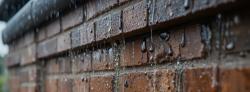 Can Masonry Walls Become Overwhelmed by Water?
Many homeowners assume brickwork and masonry walls naturally resist rain. But during prolonged storms, cavity wall masonry can become saturated, allowing water to migrate through the structure if proper damp-proofing measures are not in place.
This question became particularly relevant after severe UK winter storms, when property owners began noticing damp walls despite modern construction techniques.
The reality is simple: masonry can become overwhelmed when exposed to continuous rainfall and high winds. Without effective cavity tray systems and damp proof courses (DPCs), water that penetrates the outer wall can travel freely within the cavity and eventually cause internal damp issues.
How Rain Penetration Tests Compare to Real UK Weather
Bricks used in construction are often tested for rain penetration under standards such as BS 4315. During testing, water is sprayed at a rate of 2.5 litres per minute over a defined area.
However, there is an important detail often overlooked.
The test spray does not run continuously. Instead, it operates for one minute followed by roughly thirty minutes of pause, repeated over a 48-hour period.
In reality, this means the masonry may only receive around 90 minutes of actual water exposure during the entire test.
In contrast, the UK climate regularly produces extended periods of wind-driven rain lasting many hours or even days. Under these conditions, brickwork may become fully saturated, allowing water to enter the cavity wall system.
This is not a failure of the masonry itself, it simply demonstrates why proper cavity wall damp protection is essential.
What Happens When Brickwork Becomes Saturated?
Once masonry absorbs large amounts of water, two significant problems can occur:
Increased Water Movement Through the Cavity
When the outer brick skin becomes saturated, water can migrate through mortar joints and into the cavity space. Without adequate control measures, this moisture may reach structural elements or internal finishes.
Reduced Thermal Performance
Wet masonry conducts heat more efficiently than dry masonry. In practical terms, this means a saturated external wall can significantly increase heat loss, particularly during cold and windy weather.
This combination of moisture ingress and thermal inefficiency highlights the importance of effective building envelope design.
Why Cavity Trays Are Essential for Damp Control
To manage rain penetration in cavity walls, two key actions must occur:
Arrest water movement
Safely discharge water back outside the structure
This is the role of cavity trays and damp proofing systems.
Installed at critical junctions, such as above openings, roof abutments and structural transitions, cavity trays intercept water travelling within the cavity and redirect it to the exterior through weep vents.
Without these systems, trapped moisture may remain within the wall, increasing the risk of damp patches, insulation performance loss, and structural deterioration.
Protecting the Building Envelope with Advanced Cavity Tray Systems
As the longest-established cavity tray manufacturer in the UK, Cavity Trays of Yeovil has developed an extensive range of solutions designed to manage water migration within masonry cavity walls.
Modern tray systems incorporate features such as:
Anti-capillary water control
Integrated arrestment channels
Wider cavity compatibility
Preformed components for accurate installation
These design improvements help ensure water entering the cavity is captured, controlled and discharged quickly, reducing the risk of walls becoming overwhelmed during severe weather conditions.
Architects, builders and housing providers can explore these solutions within the Cavity Trays Product Range and supporting Resources, which provide detailed installation guidance for compliant cavity wall construction.
Why Water Management Is Critical in UK Construction
Given the UK’s exposure to persistent rainfall and strong winds, managing water penetration in masonry walls is essential.
A well-designed cavity wall system should:
Prevent water crossing from the outer skin to the interior
Provide clear drainage paths for moisture
Maintain insulation continuity
Protect the structural integrity of the building envelope
When these principles are followed, the risk of overwhelmed wet walls is significantly reduced.
Frequently Asked Questions
What causes wet cavity walls?
Wet cavity walls usually occur when rain penetrates saturated brickwork and enters the cavity, particularly during prolonged storms. Without cavity trays or damp proofing systems to intercept this moisture, it can travel further into the structure.
Can brick walls become saturated in heavy rain?
Yes. During extended periods of wind-driven rain, brickwork can become fully saturated. When this happens, water may migrate through mortar joints and into the cavity space.
Get in touch with Cavity Trays today
Call our team on 01935 474769 or email enquiries@cavitytrays.co.uk